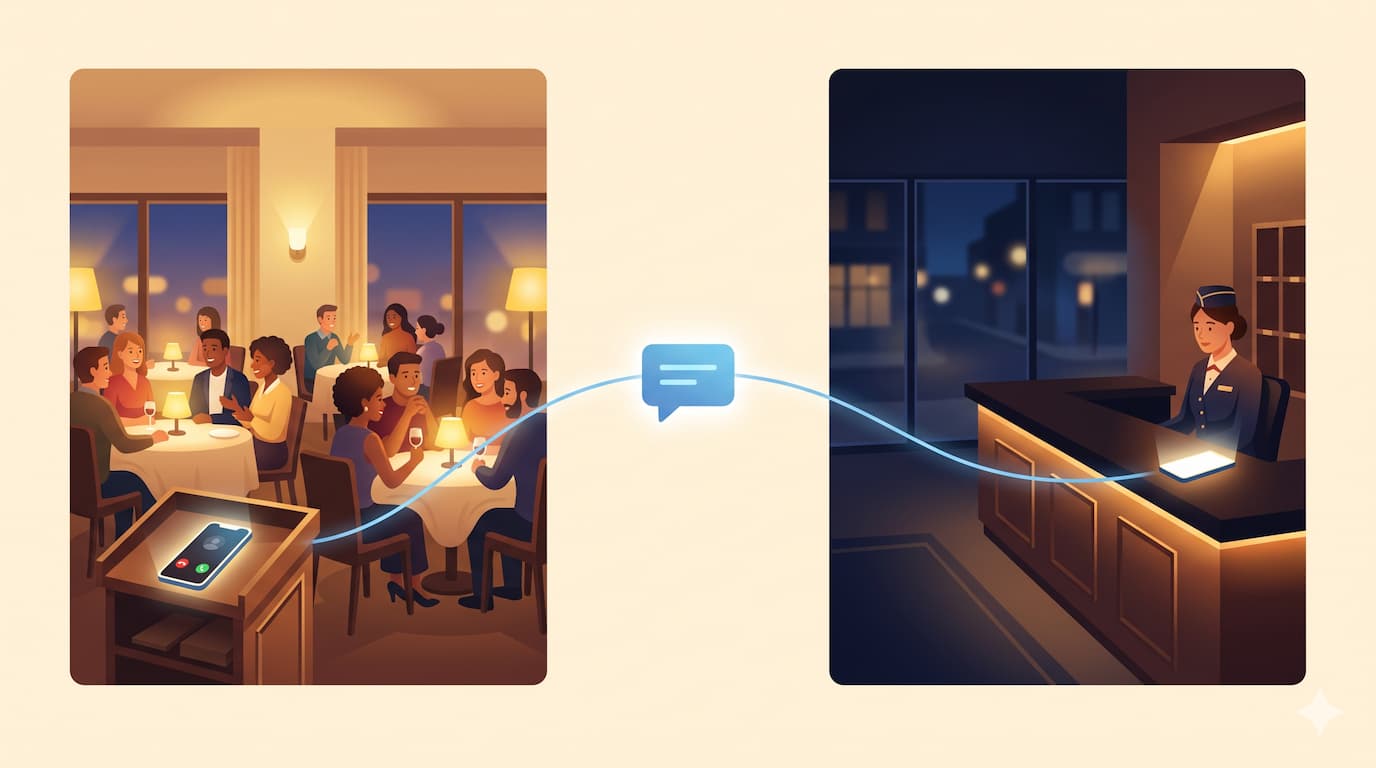
Ask most hotel or restaurant owners where their growth problem is, and they'll say the same thing: getting more people through the door. For a lot of them, it's the opposite. The customers are already there — calling during the dinner rush, messaging the hotel at midnight, landing on the website to check one detail before they book. The real problem is how many of them quietly give up when no one answers, and how much that silence quietly costs.
It's worth being concrete about the scale. Studies of restaurant phone lines suggest a large share of calls — often around 40% or more — go unanswered, and most of those callers don't leave a voicemail or ring back. In hospitality, an unanswered enquiry is rarely a deferred sale. It's a sale your competitor makes while you're busy.
The enquiries you can't get to are the ones worth the most
This isn't a discipline problem you can fix by telling staff to answer the phone. It's physics: peak call and message times line up almost exactly with peak service times. When the dining room is full or the check-in queue is six deep, your people are doing their actual jobs, and the phone loses every time.
What makes it expensive is which enquiries you miss. Online booking gets the attention, but well over half of restaurant reservations still arrive by phone or walk-in — and the calls tend to be the valuable ones: the twelve-person party, the catering request, the same-day table, the allergy question that decides whether a family books at all. A "reserve online" button doesn't catch any of that. The high-intent, high-value conversations are precisely the ones colliding with your busiest moments.
For a hotel, you can put a number on the silence
Hotels feel this differently, and the cost is easy to quantify — so let's actually do it.
Picture a guest on your website at 11pm, comparing you against two other hotels, with one question before they commit: sea view, late check-in, dog policy, whatever it is. No one's there to answer, so they go back to Booking.com and book there instead.
Say it's a €120 room for three nights — €360. Through an OTA you typically pay 15–30% commission; Booking.com sits around 15%, while independents on Expedia can land anywhere up to 25–30%. That's roughly €54 to €108 handed over. Booked direct on your own site, your cost is mostly payment processing — around 4%, or about €14. Same guest, same three nights: somewhere between €40 and €95 of pure margin, decided entirely by whether someone answered a question at 11pm.
Now multiply that by the after-hours enquiries you get in a month. The guest was already yours — they were on your site. The commission is just the toll you pay for not being there to talk to them.
Your guests aren't on your schedule, or in your language
If you operate anywhere tourism drives the trade — Valencia, the coast, the islands — there's a second layer on top. Guests arrive from everywhere, run on their home timezone, and arrive speaking a dozen languages, which means enquiries land at 3am local time in a language nobody on the night shift speaks. And most travellers would far rather send a WhatsApp than place an international call; in Spain, WhatsApp is simply how people communicate.
You can't realistically staff a multilingual front desk around the clock, and you shouldn't have to. One AI assistant can field a German guest in German and a French guest in French, on WhatsApp and on your website, at any hour, and pass anything it shouldn't handle to your team in the morning with the full conversation attached.
And no, this doesn't flatten the thing that makes hospitality work. The warmth — the welcome at the door, the server who knows the menu, the manager who fixes a problem — was never what the bot was for. It handles the repetitive and the after-hours so your people aren't pulled off the floor to take a phone order mid-service, which means the guests in front of them get better attention, not worse. The assistant replaces the silence, not the hospitality.
So where does this leave you?
The instinct to chase more demand is understandable, but for most hotels and restaurants the faster win is answering the demand you already have. The calls during the rush, the midnight website question, the WhatsApp from a guest two countries away — that's revenue arriving at your door and leaving unattended. Catch it, and you fill more tables, keep more bookings out of the commission machine, and do it in your guests' own languages without adding a night shift.
If your busiest hours are also your most-missed, that's the gap worth closing first. You can see the done-for-you version of this over at ChatOctave, or just tell me about your place and I'll point you at where you're leaking the most bookings — and what it would take to stop.